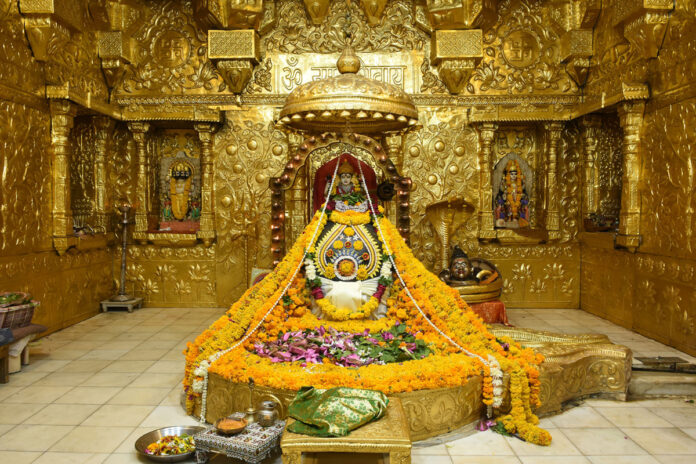

Somnath Temple: A History of Struggle, Faith, and Inspiration
Somnath Mahadev Temple, revered as the first among India’s twelve Jyotirlingas, has a history that is both deeply painful and profoundly inspiring. Nearly a thousand years ago, Mahmud of Ghazni, who traveled more than 1,500 kilometers from present-day Afghanistan, attacked this sacred shrine. In addition to Ghazni, several other invaders, including Aurangzeb, targeted the temple. In total, Somnath was attacked and damaged 17 times by plunderers over the centuries.
Yet, the wheel of time turned decisively. The rulers who attacked the temple are now confined to the pages of history, while the Somnath Temple rose again after every destruction—each time more magnificent than before. For centuries, the temple has conveyed a powerful message to the world: violent forces may destroy physical structures, but they can never break the unshakable faith and devotion of millions. Today, Somnath stands firm as a living symbol of divine power and unwavering belief.
Atal Bihari Vajpayee’s Reflections on the Somnath Attacks and Social Unity
Former Prime Minister Atal Bihari Vajpayee often shared that when he first heard the story of the attack on Somnath during his adolescence, the pain pierced his heart like a thorn and stayed with him for life. He pointed out a major weakness in our history—society at that time was divided into “warriors” and “common citizens.” The responsibility to fight was considered solely that of kings and Kshatriyas, which resulted in most people remaining passive spectators during the attack instead of taking up arms.
Later, when Vajpayee visited Ghazni in Afghanistan as India’s External Affairs Minister, he observed that it was a small and extremely poor town. He clearly stated that even in Afghan history, Mahmud of Ghazni does not occupy a place of honor. Ghazni was not a great ruler but merely a plunderer who led a group of raiders to loot India, once known as the “Golden Bird.” This narrative teaches us a crucial lesson: the defense of a nation requires unity and participation from the entire society.
The Brutal Invasion of Somnath
According to historians, Mahmud of Ghazni’s attack on Somnath was exceptionally brutal. He traveled through Jaisalmer, then Patan (Anhilwad) in Gujarat, and reached Somnath via the Delvada route near Una. There, he demolished the grand temple and mercilessly killed thousands of innocent people. He returned to Afghanistan with an estimated wealth of nearly 20 million dinars.
However, just five years after this plunder, in 1030 CE, Ghazni fell seriously ill and died in extreme suffering. Even after him, other invaders attacked Somnath a total of 17 times. Yet, in what appears as nature’s justice, all those plunderers vanished into obscurity, while the Somnath Temple continued to be rebuilt with greater divine strength and splendor after every assault—standing as living proof of the victory of faith.
Somnath Temple: From Resolution to Glorious Reconstruction
The history of Somnath includes several major reconstruction efforts. King Kumarapala rebuilt the temple in 1169 CE, Mahipal I contributed in 1308, and in 1783, Maharani Ahilyabai Holkar played a significant role in its restoration. Merely three months after India’s independence, on 13 November 1947, Sardar Vallabhbhai Patel visited Somnath and took a historic vow to rebuild the temple in its full grandeur.
The magnificent structure we see today was built through public participation and donations. Jamnagar’s royal Digvijaysinh Jadeja contributed ₹1.51 lakh, while Nanji Kalidas Mehta and many other donors generously supported this sacred mission.
Finally, on 11 May 1951, the consecration ceremony (Pran Pratishtha) of the temple was performed in the presence of India’s first President, Dr. Rajendra Prasad. At present, the Prime Minister of India serves as the Chairman of the Somnath Trust, and the temple is protected by permanent Z+ security.
As one thousand years are completed since the historic attacks on Somnath, and 75 years since its grand reconstruction, a series of magnificent celebrations are beginning today within the temple premises—honoring a legacy of resilience, unity, and eternal faith.